Rice Lentil Pilaf and Learning From the Past

May 9th, 2009

We bought a place in the country in 1977. We were reading The Mother Earth News magazines and other” back to the land movement” publications of the era and wanted to be as self sufficient as possible. The house that came with the property was a veritable shack, long ago abandoned with broken windows and critter droppings everywhere. At the time we were young and idealistic, full of energy and up for anything it took to accomplish our goals. My husband is an engineer and at the time he was doing research in solar energy applications and because the house had a good southern exposure, he was sure we could add on to the existing structure and create a solar heated home. I won’t go into the details here because this is supposed to be about the food (remember?), but we would have been better off tearing the whole thing down and starting from scratch. But, after a lot of hard work we ended up with a very nice house where we raised our son and remained until we retired two years ago.

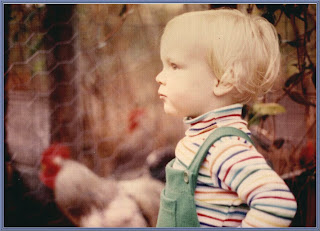
For a time we had a large vegetable garden and chickens and I have to tell you that I miss the fresh eggs. This is a shot of our son, Michael, in 1980 with the king of the hen house.

There’s one thing I don’t miss . . . the pigs. They were wily pigs. There were two of them. There was already a chicken coop and a pig pen of sorts on the property so we thought it would be “way cool” to raise our own meat. Those pigs seemed to know what was in store for them, because their whole mission in life was to escape. They would throw themselves at the pen door until the wooden peg holding it shut would give way and set them free to run. One time when my parents were visiting, I looked out the kitchen window and there was my Dad, holding the pen door shut and apparently yelling for someone to come and help him as the pigs repeatedly banged against the unsecured door. But the kicker was the time I had to call the University where David taught and have his secretary announce to everyone within earshot “Dr. Klett, your wife is on the phone. Your pigs are out again and you need to go home.” The pork chops were excellent.

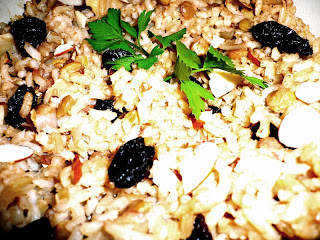
Also during this era one of my favorite cookbooks was Laurel’s Kitchen. Laurel was a clog wearing, long peasant skirt kind of gal who baked her own bread and lived in a commune. We were obviously not vegetarians like she was, nor commune wannabes, but there were many good dishes in this cookbook that are still relevant today in our health conscious, whole-grain leaning society. I would say her wisdom has stood the test of time. So finally, I’ve gotten to the subject of this post. I love Laurel’s recipe for Rice Lentil Pilaf and have been making it for years. It makes me feel virtuous and healthy with the added bonus that it tastes good. I think the hint of cinnamon does it for me. So take a page from the past and give this pilaf a try. Some things are meant to be repeated. Rebuilding another old house? Why in the world are we doing that again? Sometimes we don’t learn from the past. But I have learned from at least one past mistake . . . Pork is best when purchased from a store.

RICE LENTIL PILAF
1/2 onion, chopped
2 Tbls oil
1 cup brown rice
1/4 cup lentils
1/4 tsp cinnamon
2 1/2 cups water
1 Tbls tomato paste
1/2 tsp salt
1/2 cup golden raisins ( or dried cranberries )
1/2 cup slivered almonds
Saute onion in 1 tablespoon of the oil in a large saucepan until it is soft. Add rice and cook, stirring for several minutes. Mix tomato paste with water and cinnamon. Add this along with the lentils to the saucepan. Bring to a boil, cover, and turn heat to low and simmer for 30 minutes.

Preheat oven to 350 degrees. Coat a baking dish with the remaining tablespoon of oil. Add the salt, nuts and raisins to the rice mixture and pour into casserole. Cover and bake the casserole for 20-30 minutes. Makes 6 servings.

Printable recipe

Almond Puff Coffee Cake

May 4th, 2009


While cleaning out the back of an old closet for renovations, I found a small recipe box that I put together years ago. It was done shortly after we bought our 600 square foot Lake Lure cottage in 1984. We fell in love with this lake from the first time we saw it and when a realtor showed us a modest cottage with a huge screened in porch, we knew it would be ours. Our son Michael was seven years old at the time. He did not know how to swim, but an old speed boat came with the cottage and after watching all of the water skiers on the lake, Michael said he wanted to learn to ski. We had grown up on lakes in Michigan and had always skied. But a prerequisite to skiing is knowing how to swim. So he learned to swim and that was the beginning of wonderful summers of swimming, boating and water skiing with all of our friends and their children. Our small cottage was full most summer weekends. Because we had only two small bedrooms, each morning the living room floor and the screened in porch were full of sleeping bags containing exhausted kids. The trip to the coffee pot in the kitchen was a delicate dance, bobbing and weaving between the outstretched arms and far flung legs of deeply sleeping children. The trip to the top of the boathouse with freshly brewed coffee was much easier and the view was enough to quell any doubts about our decision to invest our modest savings in this most beautiful of places.

Feeding the crowd was sometimes a challenge, but one that I enjoyed. That’s why finding my old recipe box was such a treat. There were recipes in it for things I haven’t made in years; Frogmore Stew, Quick Breakfast Rolls, Paella Salad, Quick Coconut-Pecan Upside-Down Cake and this recipe for Almond Puff Coffee Cake. I remember liking this recipe very much, but it was more suited to the adults than the children because of the distinct almond flavor. While they were munching cereal we would dig into this lucsious coffee cake and plan another sunny day on the lake.

Now another generation of children are enjoying the cottage and the lake. We have a lot more room now. But you know what? I miss the close quarters and stepping over sleeping kids. Shhh. Don’t tell my husband I said that or he will think all of our hard work was not necessary.

The coffee cake is really very simple. It is just a pastry crust base with a pate a choux topping that is baked and then drizzled with a confectioners sugar glaze.

ALMOND PUFF COFFEE CAKE

For the pastry base:
1/4 cup cold butter cut into small pieces
1/2 cup flour
1/4 tsp salt
1 Tbls water

Mix flour and salt and pulse in food processor to combine. Add butter cubes and pulse until butter is size of small peas. Add water and pulse until dough comes together. Form into ball and place on ungreased baking sheet. Pat into a 12″x 3″ strip.

For Pate a Choux:
1/4 cup butter
1/2 cup water
1/2 tsp almond extract
1/2 cup flour
1 1/2 eggs, beaten

Melt butter in a sauce pan. Add water and bring to a rolling boil. Remove from heat and quickly stir in almond extract and flour. Return to low heat and stir until mixture forms a ball. Remove from heat again and add eggs. Stir until mixture is smooth. Spread over pastry strip. Bake for about 1 hour at 350 degrees until top is crisp and brown. Cool.

For Glaze:
3/4 cup confectioners sugar
1 Tbls soft butter
3/4 tsp almond extract
3/4 tsp warm water
2 oz. sliced almonds, toasted

Mix ingredients except almonds until smooth and spread over top of cake when cool. Sprinkle with sliced almonds. Serves 6.

Printable recipe

Pommes de Terre Au Gratin

April 29th, 2009


There is a new variety of potato in the supermarkets that I have not seen before. It is called Klondike Rose and it is a red skinned Idaho potato. The flesh is a golden color and it has a buttery taste. It sounded like the perfect vehicle for a potato gratin because the potatoes would hold their shape when arranged decoratively in the dish. Russet potatoes fall apart when cooked and are better suited for baking or mashing and because they have a high starch content make excellent french fries, potato pancakes, or galettes. The Klondike Rose is a waxy potato and is good roasted, boiled, or in au gratin dishes. When I peeled these potatoes they indeed were very golden and it was easy to slice them thinly. They held up well, but I have adjusted the recipe because I cooked them for 8 minutes on top of the stove and they did fall apart somewhat. I tucked the broken potatoes under the perfect rounds which I overlapped to make the dish look better. Cook for only 3 minutes on the stove top because they are in the oven long enough to finish cooking. This was a very satisfying dish – shades of Patricia Wells in Provence.

POMMES DE TERRE AU GRATIN

2 pounds Klondike Rose potatoes ( or any waxy potato ), peeled and sliced thinly
1 chicken bouillon cube and enough water to cover potatoes
4 ounces shredded Swiss cheese, divided
1/2 cup heavy cream
1/2 cup chicken broth
Fresh thyme sprigs, chopped
Pinch of nutmeg
Salt and pepper to taste
1/4 cup breadcrumbs

Preheat oven to 350 degrees. Put thinly sliced potatoes in large sauce pan. Cover with water and add bouillon cube. Bring to boil over medium high heat and cook for three minutes. Drain potatoes and cool slightly. Combine rest of ingredients, excluding 1 ounce of Swiss cheese and breadcrumbs, in large bowl. Toss potatoes in mixture. Arrange coated potatoes in buttered au gratin dish, overlapping them slightly. Pour contents of bowl over potatoes and sprinkle top with remaining grated cheese and the breadcrumbs. Bake for 45 minutes.

Printable recipe

Picadillo Empanadas with Cornmeal Crust

April 26th, 2009

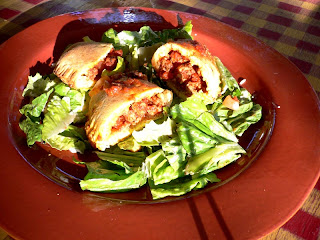
Crusty food appeals to me. Pizza, quiches, pies and sourdough baguettes are all high on my preferred foods list. This recipe for empanadas came from another old Gourmet magazine that is part of my collection going back so many years that I hate to count. Actually this recipe appeared in the September 1992 issue so it is not that old, but one of these days I am going to post a recipe from the 1970’s to see how well it holds up after all of these years. The empanadas were part of a picnic menu and I can see that they would be a good addition to any picnic because they transport easily and can be eaten without utensils if you wish. They remind me of the pasties that the Finnish people introduced to the upper peninsula of Michigan around the turn of the last century. Many Finnish men worked in the copper mines and the pasties were easy to carry for lunch and could be reheated on a shovel held over a headlamp candle. Some say the origin of the pasty is Cornish and indeed when we were in England we ate pasties there. But what I liked about this south of the border version is that the filling is spicy and cornmeal is used in the crust.
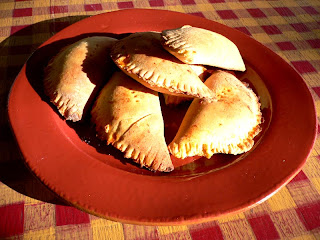

PICADILLO EMPANADAS WITH CORNMEAL CRUST

For the cornmeal dough:
a 1/4 ounce package active dry yeast
1 1/2 Tbls sugar
1/2 cup milk, heated to lukewarm
1 large whole egg, beaten lightly
1 large egg yolk, beaten lightly
1/3 cup sour cream
5 Tbls unsalted butter, melted and cooled
2 1/2 cups all purpose flour ( I needed only 2 cups )
1 1/4 cups yellow cornmeal
3/4 tsp salt

For the picadillo:
1 1/4 cups finely chopped onion
2 tsp minced garlic
2 drained bottled pickled large jalapeno chilies, seeded and minced, about 1 1/2 Tbls.
2 tsp ground cumin
1 Tbls chili powder
1 tsp cumbled dried oregano
a pinch of ground cloves
2 Tbls vegetable oil
1 pound ground chuck
1/4 cup tomato paste
28 ounce can plum tomatoes including juice chopped ( I pureed in blender )
1/3 cup raisins
1/2 cup finely chopped pimiento-stuffed green olives
dried hot red pepper flakes to taste

Make the cornmeal dough: In the large bowl of an electric mixer proof the yeast with the sugar in 1/4 cup of the milk for 5 minutes, or until the mixture is foamy. Beat in the remaining 1/4 cup milk, the whole egg, the egg yolk, the sour cream and the butter, add 2 cups of the flour, the cornmeal, and the salt, and beat the mixture until it forms a dough. With the dough hook knead the dough, adding as much of the remaining 1/2 cup flour as necessary to keep the dough from sticking, for 4 minutes, or until it is smooth and elastic. Form the dough into a ball, transfer it to an oiled bowl, and turn it to coat it with the oil. Let the dough rise, covered with plastic wrap, in a warm place for 1 1/2 hours and punch it down. The dough may be made 1 day in advance and kept covered and chilled. Let the dough return to room temperature before proceeding with the recipe.

Make the picadillo: In a large heavy skillet cook the onion, the garlic, the jalapenos, the cumin, the chili powder, the oregano, the cinnamon, the cloves, and pepper to taste in the oil over moderately low heat, stirring, until the onion is softened, add the chuck, and cook the mixture over moderately high heat, stirring and breaking up any lumps, until the meat is no longer pink. Add the tomato paste, the tomatoes with the juice, the raisins, the olives, the red pepper flakes, and salt and pepper to taste, simmer the picadillo, stirring occasionally, for 10 to15 minutes, or until it is thickened and most of the liquid is evaporated, and let it cool. The picadillo may be made 1 day in advance and kept covered and chilled. Let the picadillo return to room temperature before proceeding with the recipe.

Divide the dough into 12 pieces. Working with 1 piece of dough at a time and keeping the remaining pieces covered with plastic wrap, on a lightly floured surface roll our the dough 1/8 inch thick and with a 6 inch round cutter cut each piece into a round. Put about 1/3 cup of the picadillo onto the bottom two thirds of each round and fold the rounds in half, enclosing the filling. ( I brushed the edges with egg wash before folding ) Seal the edges of the dough and crimp them decoratively. Transfer the empanadas with a spatula to a lightly oiled baking sheet and bake them in the middle of a preheated 450 degree oven for 10 to 15 minutes, or until they are golden. Transfer the empanadas to a rack and let them cool. Makes 12 empanadas.

We have had beautiful Spring weather lately so we made a picnic of these on our screened porch.
I loved the empanadas. My husband was only lukewarm about them. You would think he would love them because his Mother’s family was Finnish and settled in the Upper Peninsula where pasties reign supreme. Oh well, they reheat well and I have enjoyed several more lunches of them on the porch. So glad that Spring is here.

Printable recipe

Croque Monsieur: Barefoot Thursday

April 23rd, 2009


I would like to offer a special thanks to Kathy of All Food Considered for choosing Croque Monsieur for the second Barefoot Contessa recipe this month. My passion for French food is long standing, but I had never made this decadent sandwich before. Perhaps it is because it is so decadent; bread, ham, cheese, white sauce and more cheese. I hate to admit it but I do not have a natural affinity for cheese. There was a time when I would not touch the stuff, but over the years I have allowed certain cheeses to prove their goodness to me. Gruyere is one of those cheeses. I think I learned to like it during the fondue era of the 70’s. Parmesan is another favorite and I liberally slather pizzas with it. So Croque Monsieur appealed to me on all levels and it did not disappoint.

The only change I made to the recipe was the bread. Ina uses Pepperidge Farm white bread and although I like it, I like my Bread Machine Rosemary Focaccia better. I will include that recipe also. The recipe came from a Better Homes and Gardens Bread Machine cookbook.


BREAD MACHINE ROSEMARY FOCACCIA

3/4 cup water
2 Tbls olive oil
2 cups bread flour
1 Tbls sugar
1 tsp salt
1 1/2 tsp bread machine yeast

3 Tbls olive oil
2 to 3 Tbls chopped rosemary
Course salt to taste

Add first six ingredients in the order given to the bread machine. Process on the dough setting. Remove dough from bread machine. Cover and let rest for ten minutes. Grease a 12″ round pizza pan. Roll or pat dough into pan. Cover and let rise for 30 minutes. Heat oven to 400 degrees. Make depressions in dough with fingertips. Drizzle with olive oil. Sprinkle with rosemary and coarse salt. Bake 15 to 18 minutes.

CROQUE MONSIEUR ( I made half of the recipe )

2 Tbls unsalted butter
3 Tbls all purpose flour
2 cups hot milk
1 tsp kosher salt ( I omitted )
1/2 tsp freshly ground black pepper
Pinch nutmeg
12 ounces Gruyere, grated (5 cups)
1/2 cup freshly grated Parmesan
16 slices white sandwich bread, crusts removed
Dijon mustard
8 ounces baked Virginia ham, sliced but not paper thin

Preheat the oven to 400 degrees F.

Melt the butter over low heat in a small saucepan and add the flour all at once, stirring with a wooden spoon for 2 minutes. Slowly pour the hot milk into the butter-flour mixture and cook, whisking constantly, until the sauce is thickened. Off the heat add the salt, pepper, nutmeg, 1/2 cup grated Gruyere, and the Parmesan and set aside.

To toast the bread, place the slices on 2 baking sheets and bake for 5 minutes. Turn each slice and bake for another 2 minutes, until toasted.

Lightly brush half the toasted breads with mustard, add a slice of ham to each, and sprinkle with half the remaining Gruyere. Top with another piece of toasted bread. Slather the tops with cheese sauce, sprinkle with the remaining Gruyere, and bake the sandwiches for 5 minutes. Turn on the broiler and broil for 3 to 5 minutes, or until the topping is bubbly and lightly browned. Serve hot. Makes 8 sandwiches.

Printable recipe – Rosemary Focaccia
Printable recipe – Croque Monsieur

© Penny Klett, Lake Lure Cottage Kitchen. All rights reserved.